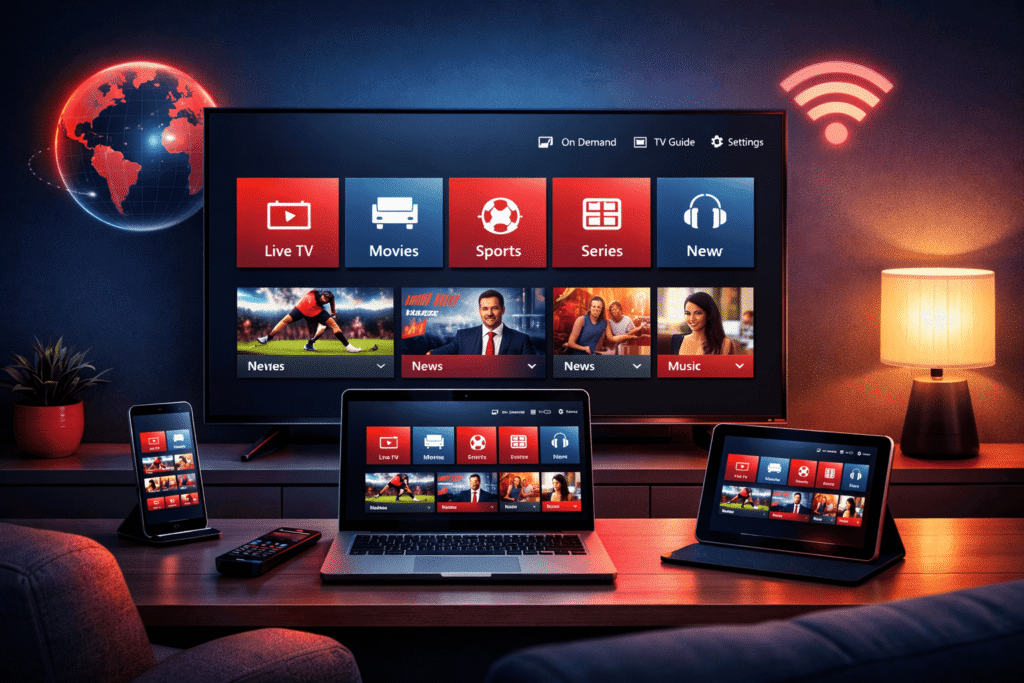
If you’ve been hearing the term “IPTV” more and more but aren’t quite sure what it means, you’re not alone. IPTV — or Internet Protocol Television — is rapidly changing how people across Ireland and the world watch television. Instead of relying on traditional aerial signals, satellite dishes, or cable connections, IPTV delivers television content directly through your internet connection. In this comprehensive guide, we’ll break down exactly what IPTV is, how it works, why thousands of households are making the switch, and how you can get started with IPTV in Ireland today.
What Is IPTV and How Does It Work?
IPTV stands for Internet Protocol Television. At its core, it’s a system that delivers TV programmes and video content over the internet rather than through traditional broadcast methods like terrestrial, satellite, or cable television. Think of it as streaming, but purpose-built for live TV and on-demand content with thousands of channels available at your fingertips.
Here’s how it works in simple terms: when you watch traditional TV, the signal is broadcast through radio waves picked up by your aerial, or sent via satellite or cable. With IPTV, the content is stored on servers and sent to your device via your broadband connection using internet protocols — the same technology that powers websites and email. This means you only receive the channel you’re currently watching, rather than receiving all channels simultaneously, which makes it far more efficient.
There are three main types of IPTV services:
- Live IPTV: Watch channels in real-time, just as you would with traditional TV. This includes live sports, news, entertainment, and international content streaming as it happens.
- Video on Demand (VOD): Access a massive library of movies, series, and documentaries whenever you want. No schedules, no waiting — just pick what you’d like to watch.
- Time-Shifted TV (Catch-Up): Missed a programme? Many IPTV services offer catch-up functionality, allowing you to watch content that aired hours or even days earlier.
IPTV vs Traditional TV: What’s the Difference?
You might be wondering how IPTV compares to the traditional TV setup you’ve been using for years. The differences are significant, and they explain why so many people in Ireland are choosing to switch. If you’re exploring the best IPTV in Ireland, understanding these differences will help you make an informed decision.
| Feature | Traditional TV | IPTV |
|---|---|---|
| Delivery Method | Aerial, satellite, or cable | Internet broadband |
| Channel Selection | Limited to provider packages | Thousands of channels worldwide |
| On-Demand Content | Limited or extra cost | Extensive VOD library included |
| Monthly Cost | €40–€100+ | €10–€25 |
| Device Compatibility | TV set only | Smart TV, phone, tablet, PC, box |
| Installation | Dish or cable installation needed | Simple app download |
| Picture Quality | HD (varies) | HD, Full HD, 4K available |
| Contract | 12–24 month contracts | Flexible – monthly, quarterly, yearly |
As you can see, IPTV offers significantly more flexibility, a far greater channel selection, and a fraction of the cost compared to traditional television providers in Ireland.
Benefits of IPTV: Why People Are Switching
The rapid growth of IPTV across Ireland isn’t accidental. There are compelling reasons why households are cutting the cord and making the switch. Here are the biggest benefits:
1. Massive Content Library
With IPTV, you gain access to thousands of live channels from Ireland and around the world, along with a huge on-demand library of movies, series, and documentaries. Whether you enjoy live sports, international entertainment, kids’ programming, or news coverage, everything is available in one place.
2. Significant Cost Savings
Traditional TV packages in Ireland can easily cost €50 to €100 or more per month. IPTV subscriptions typically range from just €10 to €25 per month, giving you access to far more content for a fraction of the price. Over a year, that’s savings of hundreds of euros.
3. Watch on Any Device
IPTV isn’t limited to your living room television. You can watch on your smartphone, tablet, laptop, desktop computer, Smart TV, or a dedicated IPTV box. Many providers allow multiple simultaneous connections, so everyone in the household can watch something different. For details on compatible devices, check out our guide to the best IPTV box options available.
4. No Contracts or Long-Term Commitments
Unlike traditional providers that lock you into 12 or 24-month contracts, most IPTV services offer flexible subscription plans. You can subscribe monthly, quarterly, or yearly — and cancel whenever you like without penalties.
5. High-Quality Streaming
Modern IPTV services deliver content in HD, Full HD, and even 4K resolution. As long as you have a stable internet connection with sufficient speed, you can enjoy crystal-clear picture quality that rivals or surpasses traditional broadcasts.
6. Electronic Programme Guide (EPG)
Most IPTV services include an EPG that works just like the programme guide on traditional TV. You can browse what’s on now, what’s coming up, and plan your viewing schedule with ease.
What Do You Need to Use IPTV?
Getting set up with IPTV is surprisingly simple. Here’s what you need:
- A Stable Internet Connection: This is the most important requirement. For smooth HD streaming, you’ll need at least 15-25 Mbps. For 4K content, aim for 50 Mbps or higher. Most modern broadband packages in Ireland will more than suffice.
- A Compatible Device: You can use a Smart TV (Samsung, LG, Sony, etc.), an Android TV box, Amazon Fire TV Stick, smartphone, tablet, or computer.
- An IPTV Subscription: You’ll need a subscription from a reliable IPTV provider that gives you access to channels and content.
- An IPTV App or Player: This is the software that receives and plays the IPTV content on your device. Popular options include apps available on the Google Play Store and other app marketplaces. You can find the right one in our best IPTV app guide.
That’s it — no satellite dish, no cable installation, no engineer visits. If you have broadband and a device, you’re ready to go.
Compatible Devices for IPTV
One of the biggest advantages of IPTV is its compatibility with a wide range of devices. Here’s a breakdown of the most popular options:
| Device Type | Examples | Best For |
|---|---|---|
| Smart TV | Samsung, LG, Sony, Hisense | Living room viewing, best picture quality |
| Android TV Box | Formuler, MAG, BuzzTV | Dedicated IPTV experience, powerful performance |
| Streaming Stick | Amazon Fire TV Stick, Chromecast | Budget-friendly, portable, easy setup |
| Smartphone | iPhone, Android phones | On-the-go viewing, commuting |
| Tablet | iPad, Samsung Galaxy Tab | Bedroom viewing, travel |
| Computer | Windows PC, Mac, Laptop | Multi-tasking, office viewing |
No matter which device you prefer, there’s an IPTV solution that fits your lifestyle. Many users start with a streaming stick or their existing Smart TV before upgrading to a dedicated IPTV box for the best experience.
How to Choose a Reliable IPTV Provider
Not all IPTV providers are created equal. Choosing the right one is crucial for a smooth, enjoyable viewing experience. Here’s what to look for when selecting your provider:
- Server Stability & Uptime: A reliable provider should have minimal downtime and consistent streaming quality. Look for providers that invest in high-quality servers and infrastructure.
- Channel Selection: Ensure the provider offers the channels you actually want to watch, including local Irish content and international options.
- Video Quality: The best providers offer HD, Full HD, and 4K streams. Ask about picture quality before subscribing.
- Customer Support: Good customer support is essential. Look for providers offering live chat, email support, or even WhatsApp support for quick issue resolution.
- Trial Period: Reputable providers often offer a trial period or short-term subscription so you can test the service before committing long-term.
- Device Compatibility: Make sure the provider supports all the devices you plan to use.
- EPG & Catch-Up: An electronic programme guide and catch-up TV functionality greatly enhance the viewing experience.
- Payment Options: Look for providers offering secure payment methods and flexible billing cycles.
For a detailed comparison of top-rated providers, read our guide on the best IPTV in Ireland for 2026.
How to Get Started with IPTV in Ireland
Ready to make the switch? Here’s a quick step-by-step overview to get you started:
- Check Your Internet Speed: Run a speed test to ensure you have at least 15-25 Mbps for HD streaming. Most Irish broadband providers offer speeds well above this.
- Choose Your Device: Decide what you’ll watch on — Smart TV, Fire Stick, Android box, phone, or computer.
- Select a Provider: Research and choose a reliable IPTV provider that suits your needs and budget.
- Subscribe & Receive Credentials: After subscribing, you’ll receive login details or an M3U link/Xtream Codes to set up your service.
- Download an IPTV App: Install a compatible IPTV player app on your device.
- Enter Your Details & Start Watching: Input your subscription credentials into the app and you’re ready to enjoy thousands of channels.
For a more detailed walkthrough with screenshots and tips, see our complete guide on how to get IPTV in Ireland.
Internet Speed Requirements for IPTV
Your internet speed plays a critical role in your IPTV experience. Here are the recommended speeds for different quality levels:
- SD Quality (480p): 5-10 Mbps
- HD Quality (720p): 10-15 Mbps
- Full HD (1080p): 15-25 Mbps
- 4K Ultra HD: 50+ Mbps
Keep in mind that these speeds are per stream. If multiple people in your household are watching simultaneously, you’ll need more bandwidth. For instance, two Full HD streams would require around 40-50 Mbps. A wired Ethernet connection is always preferable to Wi-Fi for the most stable performance. If you do encounter streaming issues, our IPTV troubleshooting guide can help you resolve them quickly.
Is IPTV Worth It in 2026?
Absolutely. For most people in Ireland, IPTV represents a significant upgrade over traditional television in almost every way. You get more content, better flexibility, multi-device support, and you save a substantial amount of money each month. The technology has matured considerably, and modern IPTV services offer reliable, high-quality streaming that rivals anything traditional broadcasters provide.
Whether you’re a sports fan who wants comprehensive live coverage, a film enthusiast looking for a massive on-demand library, or a family wanting affordable entertainment across multiple devices, IPTV ticks all the boxes. The fact that there are no long-term contracts means you can try it risk-free and see the difference for yourself.
If you’re ready to explore your options, visit our homepage to discover the best IPTV options available in Ireland right now.
Frequently Asked Questions About IPTV
What is IPTV in simple terms?
IPTV is television delivered over the internet instead of through aerial, satellite, or cable. It allows you to watch live channels, on-demand movies, and series on any internet-connected device, including Smart TVs, phones, tablets, and streaming boxes.
Do I need a special device to use IPTV?
No, you don’t need a special device. IPTV works on Smart TVs, smartphones, tablets, computers, Amazon Fire TV Sticks, and Android TV boxes. However, a dedicated IPTV box can enhance your experience with better performance and a more TV-like interface.
How fast does my internet need to be for IPTV?
For standard HD streaming, you’ll need at least 15-25 Mbps. For 4K content, 50 Mbps or higher is recommended. Most broadband packages available in Ireland today are more than sufficient for smooth IPTV streaming.
How much does IPTV cost in Ireland?
IPTV subscriptions in Ireland typically range from €10 to €25 per month, depending on the provider and subscription length. This is significantly cheaper than traditional cable or satellite TV packages, which can cost €50 to €100+ monthly.
Can I use IPTV on multiple devices at the same time?
Yes, most IPTV providers offer multi-device support, allowing you to watch on two or more devices simultaneously. The exact number of connections depends on your subscription plan, so check with your provider for details.
What happens if my IPTV is buffering or not working?
Buffering is usually caused by a slow or unstable internet connection. Try restarting your router, connecting via Ethernet instead of Wi-Fi, or lowering the stream quality. For more solutions, check our detailed IPTV troubleshooting guide.